
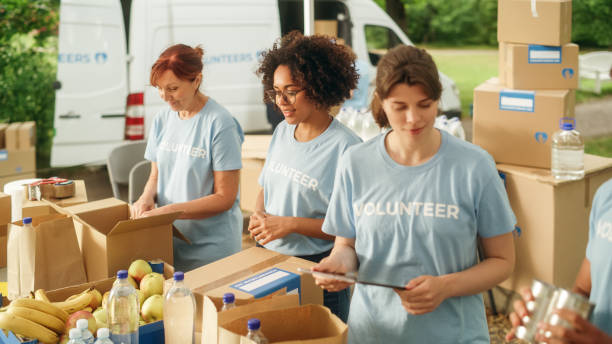
Food banks are essential for helping people and families who are food insecure, but without the commitment of volunteers, they couldn’t function as well. Volunteers are the foundation of many groups, helping with everything from meal distribution to contribution processing. When consumers are looking for food banks near me, they can count on reliable assistance because of their dedication, empathy, and time.
Everyday Operations Are Made Possible By Volunteers
Every time a family receives a package of food, a volunteer has devoted their time to make it happen. Every week, food banks handle hundreds of pounds of food, which takes a lot of workers to manage. Volunteers fill food boxes or bags, arrange shelves, sort contributions, and verify expiry dates. Their efforts guarantee that the food is fresh, safe, and prepared for distribution.
Many food banks simply wouldn’t have enough staff to handle contributions effectively without volunteers. Paid employees often concentrate on coordination, outreach, and administrative duties. Volunteers cover the gaps by doing the manual work necessary to maintain the efficient running of the whole organization.
Encouraging Client Services And Distribution
Some of the busiest days at a food bank or pantry are distribution days. Volunteers are the welcoming faces who welcome families, check them in, provide them with information about services, and assist them in making dignified meal choices. These exchanges are very important since volunteers foster a friendly, courteous atmosphere at a moment when many individuals could be anxious or unsure.
Additionally, volunteers assist with drive-through or curbside delivery, swiftly placing boxes into cars to ensure that large lines go smoothly. Their participation guarantees that those looking for food banks near me get assistance without having to wait a long time or becoming confused.
Developing Community Connections
The relationships that volunteering fosters inside the community are among its greatest advantages. The goal of helping neighbors in need unites people of diverse ages, backgrounds, and skill levels. More donations, more awareness, and sustained support for food programs are all sparked by this feeling of solidarity.
Advocates are volunteers. Many people talk about their experiences with friends, coworkers, and social groups after seeing the genuine effect of food aid programs. More fundraising activities, more contributions, and more volunteer signups are often the results of this. This continuous cycle of community service is what makes food banks so successful.
Increasing Productivity With Specialized Skills
A lot of volunteers contribute useful skills from their work experiences. Some assist food banks in optimizing their distribution and storage systems because they have experience in logistics. Others could have worked in event development, nutrition teaching, or customer service. These skills go far beyond simple duties to improve food bank operations.
For instance:
- Technology-savvy volunteers might contribute to better data monitoring or scheduling systems.
- Community outreach may be aided by someone with skills in communication or marketing.
- Programs for family assistance or nutrition education may be assisted by retired educators.
Food banks are able to assist more people and become more efficient and well-organized thanks to these donations.
Volunteers Aid In Stretching Tight Budgets
Due to their tight resources, food banks mostly depend on grants and contributions. Many firms would not be able to hire huge teams of paid staff. By providing hours of unpaid work that would otherwise cost thousands of dollars each month, volunteers help close this gap.
This implies that instead of spending money on personnel, more money can be used to enhance outreach initiatives, maintain storage facilities, and buy fresh vegetables. In the end, more families with the same financial means may be served by food banks thanks to volunteer labor.
The Effects Of Volunteer Support On Emotions
Volunteers provide emotional support in addition to practical assistance. Many of the individuals who visit food banks are going through challenging times in their lives, such as family crises, medical costs, job loss, or unstable housing. Volunteers who are patient and kind create a welcoming atmosphere where individuals are treated with respect rather than condemned.
A few words of encouragement, a simple discussion, or a warm smile may have a long-lasting impact. Returning families often recognize and feel reassured by volunteers, who make them feel less isolated during difficult times.